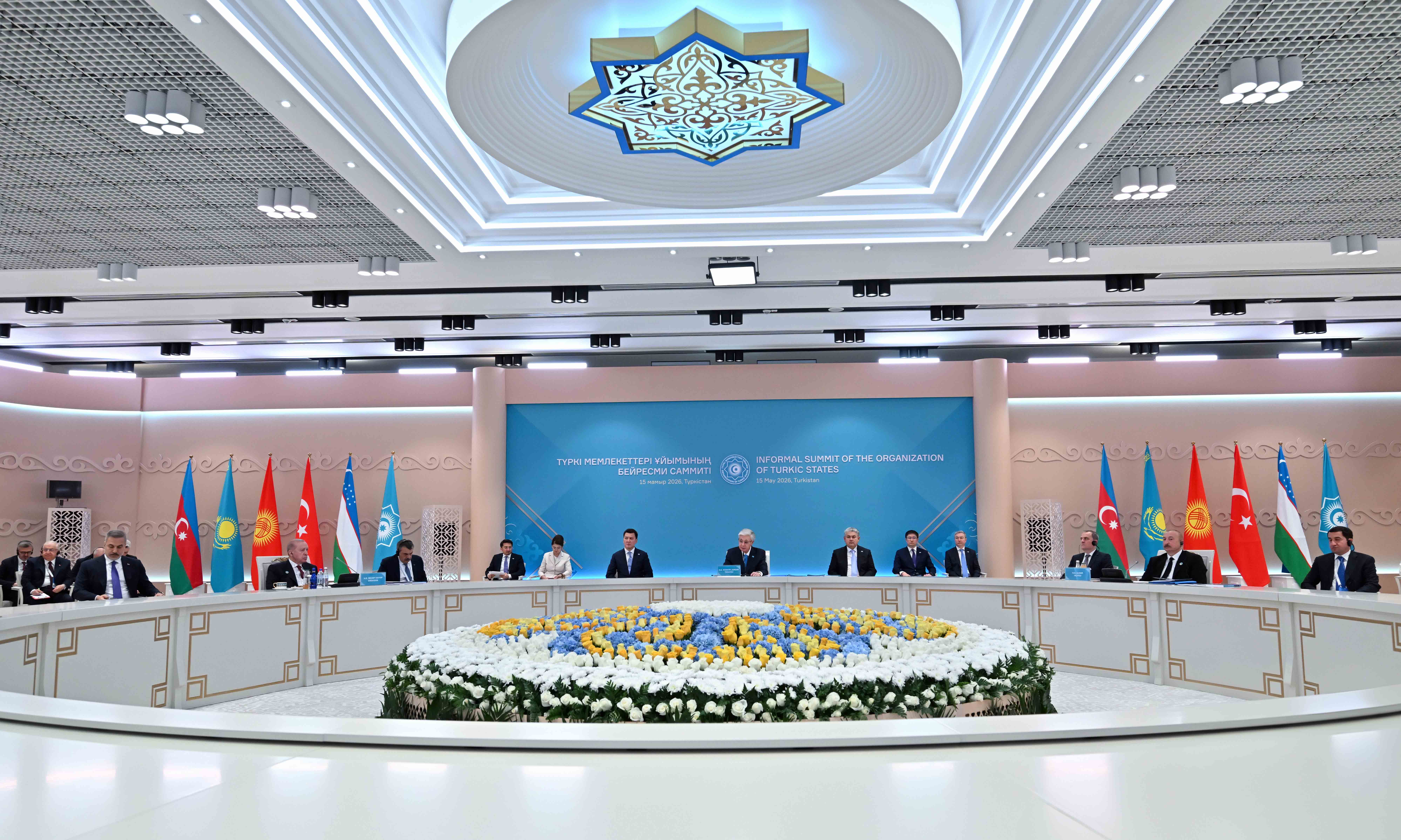
The summit took place against the backdrop of the ongoing transformation of the global economy, shifts in logistics routes, and the accelerated development of digital technologies. Under these conditions, OTS countries are increasingly viewing the organization not only as a cultural and humanitarian platform, but also as a mechanism for coordinating efforts in the areas of the economy, transport, investment, and technological development.
One of the central themes of the meeting was the digital future of the Turkic space. The leaders discussed prospects for cooperation in the areas of artificial intelligence, digitalization of public services, cybersecurity, and workforce training for the new economy. Particular attention was paid to the need for a joint response to technological challenges and to creating conditions for enhancing the competitiveness of the countries of the region on a global scale.
Speaking at the summit, President of Kazakhstan Kassym-Jomart Tokayev emphasized that amid growing international instability, the importance of cooperation among Turkic states is increasing. “In this period of turbulence, the unity of the Turkic states takes on special significance, since we are united by a centuries-old shared history,” he noted in his speech. According to him, the most important task is not only preserving the common cultural heritage, but also building modern mechanisms of cooperation that meet the demands of the new era.
Kazakhstan put forward a number of initiatives aimed at strengthening cooperation in the digital sphere. As Kassym-Jomart Tokayev emphasized, “states that adopt digital technologies in a timely manner will not be left on the sidelines of progress.” This idea largely reflects the overall mood of the meeting’s participants, who view digital transformation as one of the key factors of sustainable development.
At the same time, the summit’s agenda was not limited to technology issues. The participants confirmed their interest in the further development of transport and logistics links, the expansion of trade and economic cooperation, and the strengthening of investment cooperation. These issues are gaining particular relevance because of the growing role of the Middle Corridor, which is gradually becoming one of the important routes linking East and West.
The results of the meeting in Turkestan showed that the Organization of Turkic States continues to strengthen its position as one of the notable centers of regional cooperation in Eurasia. While preserving the cultural and civilizational foundation of interaction, the pragmatic dimension of integration, linked to the joint search for answers to the economic, technological, and geopolitical challenges of our time, is becoming increasingly clear. It is precisely this combination of historical commonality and a future-oriented outlook that is shaping the new agenda of the Turkic world today