The environmental and ESG agenda became one of the key themes of the international exhibition of green technologies and sustainable solutions, RES 2026 EXPO, which was held in Astana from April 22 to 24. The exhibition brought together representatives of government agencies, businesses, international organizations, and the expert community. The event venue hosted discussions on decarbonization, the development of renewable energy, waste recycling, the adoption of climate technologies, and attracting investment into the green economy.
ERG’s participation in the exhibition was a logical continuation of the company’s commitment to environmental modernization. The stand featured projects reflecting the key areas of its strategy: the development of the circular economy, reducing the carbon footprint of production, and integrating renewable energy sources into industrial infrastructure.
One of the central projects was gallium production, a critical material for today’s high-tech economy. Gallium is used in microelectronics, telecommunications, solar power, and the defense industry. ERG’s project is being implemented on the principle of a closed production cycle: the metal is extracted from alumina production solutions before they become waste.
This approach allows the company to address several objectives at once: reducing the environmental burden, improving resource-use efficiency, and creating a new export product with high value added.
Investment in the project exceeds 13 billion tenge, and the design capacity will be up to 15 tons of gallium per year. In the future, this could allow Kazakhstan to rank second in the world by production volume.
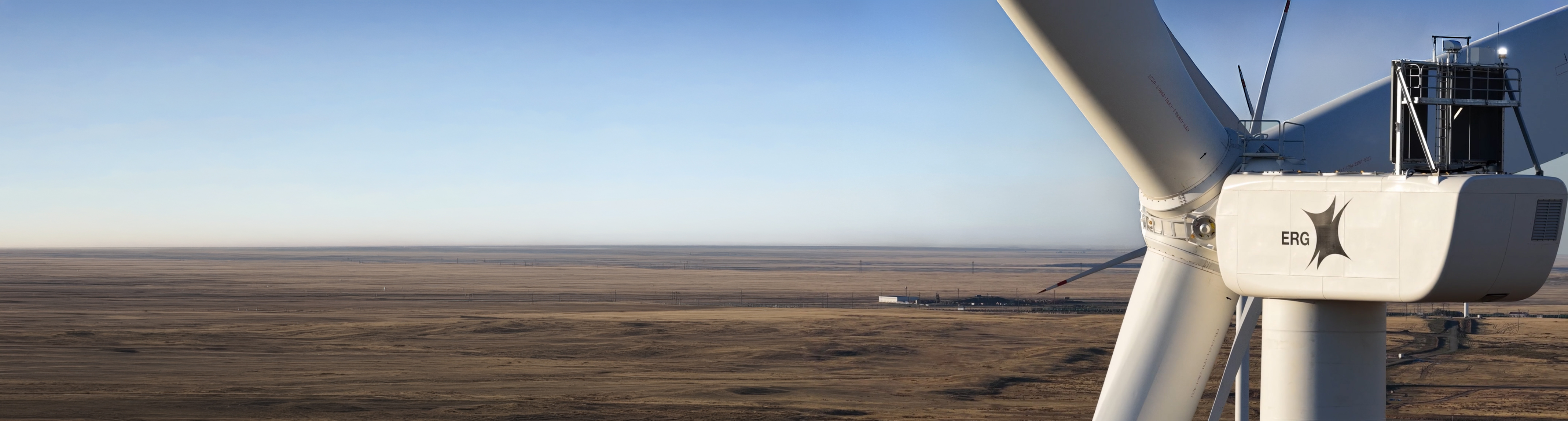
Another illustrative project was the 150 MW wind power plant in Khromtau. The exhibition featured models of the plant’s wind turbines, and the facility has already been commissioned. Annual generation amounts to up to 500 million kWh of green electricity. This makes it possible to reduce the carbon footprint of production and prevent emissions of around 440 thousand tons of CO₂.
For ERG, this project is important not only as an element of its ESG strategy, but also as part of a new energy model in which green power generation becomes not an external source, but an embedded element of industrial infrastructure.
As part of the RES 2026 EXPO business program, Talgat Torebekov, Director of the Environmental Protection Department at ERG Kazakhstan, took part in the panel session “Strategic Resources in an Era of Transition: How Industry Seeks a Balance Between Growth and Responsibility.”
“Today, sustainable development is the foundation on which production processes are built. At ERG, as part of our Environmental Strategy, we are consistently modernizing our operations and implementing technologies that make it possible to reduce environmental impact at every stage. We strive to extract maximum value from existing processes,” Talgat Torebekov noted.
ERG remains a systemically important company for Kazakhstan’s economy. It accounts for about 2% of the country’s GDP, and including related industries, the company supports up to 169 thousand jobs. Its vertically integrated structure, from raw material extraction to metallurgy, energy, and logistics, makes it possible to control the entire production cycle.
However, it is precisely the scale of the business that makes environmental transformation especially complex. The changes affect several industries at once and require a comprehensive approach: modernization of equipment, revision of the energy balance, implementation of new reporting standards, and restructuring of production processes.
ERG’s environmental strategy envisages the phased alignment of its operations with international standards. By 2030, the company plans to allocate around 282 billion tenge to environmental projects.
This is not about isolated improvements, but about a systemic reduction of impact across key areas: cutting atmospheric pollutant emissions, reducing discharges into water bodies, lowering water consumption, and developing the recycling of secondary resources.
One of the key regions for implementing environmental solutions has been the Pavlodar Region, where the company’s major energy and metallurgical assets are concentrated.
Modern air purification systems, including hybrid electrostatic precipitators, are being introduced here. In particular, a project is being implemented at the Aksu power plant with the participation of Fujian Longking, an international manufacturer of environmental protection equipment. Such technologies had previously seen virtually no use at energy facilities in Kazakhstan and the CIS countries.
“Hybrid filters belong to the category of best available technologies and make it possible to achieve a fundamentally new level of purification. In some cases, this means the near-total capture of particulate matter,” Talgat Torebekov notes.
At the same time, projects are also being implemented in other regions. In Kostanay Region, the conversion of a heating plant from coal to gas reduced emissions by tens of percent. In Aktobe Region, gas-cleaning systems are being modernized. Automated air quality monitoring systems are being introduced at a number of facilities.
Another important area is power generation from recovered ferroalloy gas at the Aktobe Ferroalloys Plant. Instead of flaring, the gas is used to generate electricity. This makes it possible to simultaneously improve energy efficiency and reduce emissions.
“For us, energy projects are an element of a profound technological transformation of the entire production chain. We are working to reduce the carbon footprint of our products from raw material extraction to the final processing stage,” Talgat Torebekov emphasizes.
The circular economy is also becoming an important part of the environmental strategy. In addition to extracting gallium, ERG is developing ERG Green’s recycling capacity in Khromtau. Such projects reflect a shift from the linear model of “extraction – production – waste” to a closed cycle in which by-products become resources.
At the same time, the environmental component of products is becoming an increasingly significant factor in competitiveness in external markets. The company is implementing international environmental reporting standards, obtaining Environmental Product Declarations (EPD), and undergoing independent audits involving international companies.
“Today, requirements for industrial products go beyond price and quality. The carbon footprint is becoming a key factor, and this directly affects access to global markets,” notes ERG Kazakhstan Chief Executive Officer Abylai Sadenov. “At the same time, as we develop the business, we are fully aware of our responsibility to our country. We are consistently implementing solutions aimed at reducing environmental impact and using resources rationally.”
The environmental transformation of industry is a long-term, multi-level process. It requires not only investment, but also new management decisions, technological modernization, and engagement with the regions where the company operates.
ERG’s experience shows that in Kazakhstan, the environmental agenda is gradually moving from the declarative sphere into practical implementation. And today, it is precisely such transformations that are beginning to determine not only the sustainability of individual companies, but also the competitiveness of entire industries in the new global economy.