This is especially evident in the country’s capital. Astana remains one of the fastest-growing cities in Central Asia. The population increases every year, new residential districts are being built, and modern schools and kindergartens are being opened. Alongside infrastructure development, the need for teaching staff is also growing. Primary school teachers, preschool educators, foreign language teachers, and inclusive education specialists are now among the most in-demand professions in the capital’s labor market.
The Magzhan Zhumabayev International Higher College contributes to addressing this task—one of Astana’s leading pedagogical educational institutions, which for many years has been training specialists for the capital’s and Kazakhstan’s education system.
Today, the college is a modern educational center focused on training practice-oriented specialists. The foundation of its educational portfolio consists of pedagogical specialties: preschool education and training, pedagogy and methodology of primary education, foreign language in primary school, physical culture and sports, computer science, and other fields. Between 2018 and 2024, the college trained more than 8,000 specialists with a pedagogical profile, many of whom now work in educational institutions in the capital and the country’s regions.
In recent years, special attention has been paid to the development of inclusive education. Kazakhstan is steadily expanding opportunities for educating children with special educational needs, creating conditions for their full integration into society. This work requires not only infrastructure modernization in schools, but also the training of a new type of specialists.
According to the Ministry of Education of the Republic of Kazakhstan, there are more than 230,000 children with special educational needs in the country. In 2025, more than 94,000 children were studying in an inclusive educational environment, and conditions for inclusive education had been created in 95.2% of the country’s schools. Experts note a steady trend toward an increase in the number of children with special educational needs. If their number currently exceeds 230,000, then with population growth and improved diagnostics, a further increase in the need for inclusive education is expected by 2050.
That is precisely why one of the college’s most important areas of development has been the launch of new educational programs in the specialties of Speech Therapy and Organization of Individual Support with the qualification of Teacher Assistant. Today, such specialists are in demand in virtually all regions of the country.
In the context of implementing the provisions of the updated Constitution of the Republic of Kazakhstan, which is oriented toward building a social state, ensuring the well-being of citizens, and protecting the rights of every person, the development of inclusive education is taking on particular importance. Creating equal opportunities for all children to receive a quality education, regardless of their individual characteristics and needs, is one of the priority areas of state policy.
The teacher assistant is becoming an important participant in the educational process, helping the child adapt within the group, master the curriculum, and realize their potential. Speech therapists, in turn, provide timely correction of speech disorders and contribute to the successful socialization of children. The development of these areas reflects a global trend toward creating a more accessible and inclusive educational environment, where every child has the opportunity to fulfill their potential.
An equally important area of the college’s work is international cooperation. In the context of globalization, education is becoming one of the key instruments of humanitarian interaction between countries. Of particular importance for Kazakhstan is the development of educational ties within the Shanghai Cooperation Organisation, which brings together states with enormous demographic potential, scientific potential, and economic potential.
Seeking to align with current trends in educational development and strengthen international cooperation, the college has set itself the strategic task of developing interaction between the educational space of Eurasia and the countries of Southeast Asia. This area is viewed as an important factor in improving the quality of specialist training, exchanging best teaching practices, and introducing innovative educational practices.
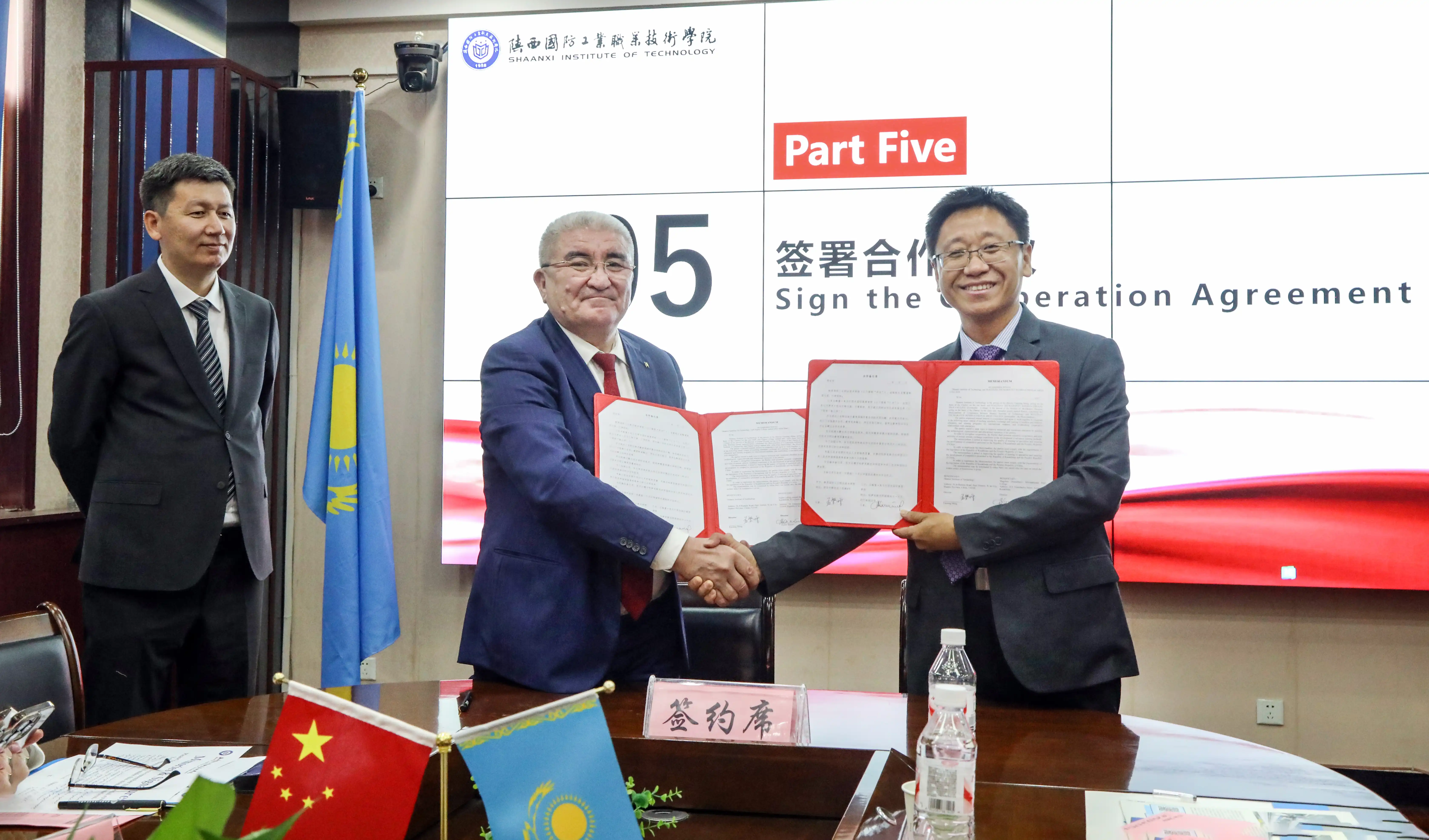
In recent years, the college has significantly expanded its international partner network. In 2024, memorandums of cooperation were signed with Kazan Pedagogical College and Arsk Pedagogical College named after Gabdulla Tukay. A new stage in its international activities is linked to the development of partnerships with educational organizations in the People’s Republic of China, opening additional opportunities for academic exchange, the implementation of joint projects, and the strengthening of professional ties between pedagogical communities in different countries.
In 2025, the college concluded cooperation agreements with the Western China (Chongqing) Research Institute on Academia-Industry Integration (Chongqing Western Research Institute on the Integration of Education and Industry), Chongqing Yubei Vocational Education Center (Chongqing Yubei Vocational Education Center), Chongqing Polytechnic University of Electronic Technology, and the SCO Education Alliance. These agreements open up new opportunities for the academic mobility of students and faculty, the implementation of joint educational programs, internships, and the exchange of best international practices.
Cooperation with Chinese partners is of particular value also because the People’s Republic of China is now one of the world leaders in high technology, artificial intelligence, and the digital economy. Familiarity with advanced educational practices and technological solutions makes it possible to train specialists capable of working effectively in conditions of rapid digital transformation.
The modern school is also changing rapidly. Artificial intelligence, digital educational platforms, big data, and new communication formats are gradually becoming part of the educational process. Therefore, teacher training today is no longer limited to classical teaching methods. A new-generation educator must be proficient in modern digital tools, know how to work with educational analytics, and use technology to improve the quality of instruction.
In this context, the college views the development of digital competencies as one of the key areas of its work. Educational programs are regularly updated to reflect current requirements, and international cooperation makes it possible to integrate the world’s best practices into the learning process.
The development of digital competencies, the introduction of innovative educational technologies, and the expansion of international cooperation reflect a broader trend characteristic of Kazakhstan’s modern education system. Today, the country faces the strategic task of shaping a new generation of human capital capable of ensuring sustainable economic development, the introduction of advanced technologies, and the implementation of large-scale national projects. Addressing this task requires training specialists not only for the education sector, but also for key branches of industry, the energy sector, the digital economy, and high-technology production.
An additional impetus for the development of technical education comes from large-scale state projects aimed at strengthening the country’s technological and energy independence. Of particular importance in this context is the implementation of the project to build the first nuclear power plant in Kazakhstan. This project is regarded as one of the key elements of the long-term strategy for developing the energy sector and requires the formation of a strong talent pool of mid- and senior-level specialists. Against the backdrop of growing electricity consumption and the development of industry and the digital economy, the energy sector is now among the most in-demand areas for workforce training. Therefore, training specialists in the electric power industry, automated control systems, and modern energy technologies is becoming an important condition for the country’s sustainable development.
The response to these challenges is the formation of an integrated workforce training system that brings together the best practices of vocational education, modern learning technologies, and close interaction with employers. Within a unified educational ecosystem, the prerequisites have already been created for training specialists in the most in-demand areas of the economy, ensuring continuity of educational trajectories and the practice-oriented nature of training.
In this context, the development of the technical area of workforce training within a unified educational ecosystem takes on particular importance. Within the corporation’s educational sphere, the Astana-Profi College of Urban Economy operates successfully, providing training for specialists in in-demand technical and engineering and technology fields aligned with the needs of the modern economy and labor market.
The college has substantial experience in workforce training for the energy, industrial, urban economy, and digital infrastructure sectors. The educational process is built on the principles of practice-oriented training, close interaction with employers, and the introduction of modern technologies, which makes it possible to ensure a high level of professional training for graduates.
A promising area for further development is the expansion of the range of educational programs in the electric power industry, industrial automation, robotics, radio electronics, unmanned aerial systems (UAS), digital control systems, intelligent manufacturing technologies, and other fields that determine the country’s technological development. Of these, a special place is occupied by the training of specialists in unmanned aerial systems, which today are becoming an important element of the digital economy and are finding wide application in civil aviation, industry, the energy sector, agriculture, cartography, logistics, and infrastructure monitoring. The growth of the unmanned technology market is generating strong demand for qualified personnel capable of working with modern aviation, engineering, and digital systems. The implementation of these programs will make it possible to create a modern workforce training model that combines the engineering, digital, and applied competencies required to work in the conditions of Industry 4.0 and the digital transformation of the economy.
This approach fully corresponds to international trends in the development of vocational education, within which educational organizations are becoming not only centers for training specialists, but also platforms for the introduction of innovations, the development of applied science, technology entrepreneurship, and the preparation of a talent pool for strategically important sectors.
Thus, the synergy of the Magzhan Zhumabayev International Higher College and the Astana-Profi College of Urban Economy within a unified educational ecosystem is forming a unique workforce training model that covers a wide range of fields—from pedagogy, digital technologies, and artificial intelligence to engineering, energy, industrial production, and high-technology sectors of the economy.
This model ensures continuity of educational trajectories, a prompt response to labor market needs, and the training of specialists for the country’s priority development sectors. In the future, it may become an effective instrument for implementing state policy in the development of human capital, technological modernization, and the strengthening of the human-resource capacity of the Republic of Kazakhstan, while also serving as a successful example for scaling at the national level