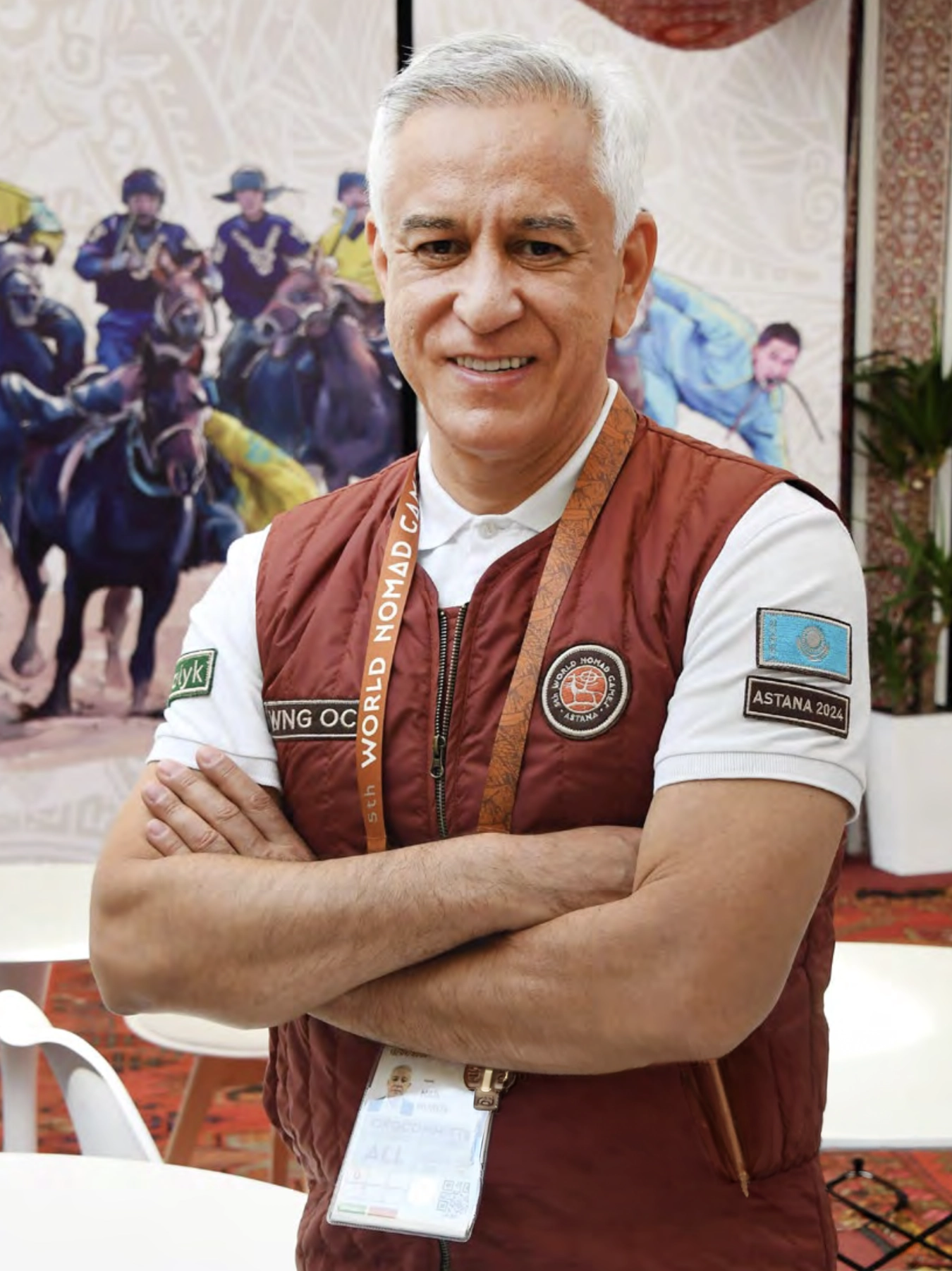
— Why was it important to hold the 5th World Nomad Games in Kazakhstan?
— Before that, the Games were held three times in Kyrgyzstan and once in Turkey. Kazakhstan has traditionally participated in all games from the very beginning and has always demonstrated high results. Once the Organization of Turkic States decided to expand the geography of the Games beyond the one country that initiated and organized them, it became clear that Kazakhstan would be one of the first to respond to this initiative.
Kazakhstan is not only justifiably considered the center of nomadic civilization, but also proudly perceives its role in the preservation and development of nomadic culture. Therefore, holding the Games in our country was a natural step to strengthen this status. We wanted to show that the civilization of nomads is about us, about Kazakhs. Organizing the Games in Kazakhstan has become a matter of honor, and this is one of the main reasons.
In addition, there are other important aspects. Personally, I believe that the holding of the Games was timely, as the Head of State has repeatedly emphasized the importance of developing mass and national sports in our country. This is critical to the health of the nation and the education of the youth. Such major sporting events can be a powerful incentive for the development of certain sports. For example, after the Asian Winter Games in Kazakhstan in 2011, there was a surge of interest in winter sports. I witnessed it myself when I worked in the sports sector in Almaty: after the Games, the phones were ringing off the hook, and parents were actively looking for places to enroll their children in hockey, figure skating and other winter sports. The same thing happened after the World University Games in 2017.
I am sure that after the World Nomad Games in Kazakhstan we will see a massive surge of interest in national sports. This is one of the key reasons why we organized these Games. It is important for us to develop national and grassroots sports in our country.
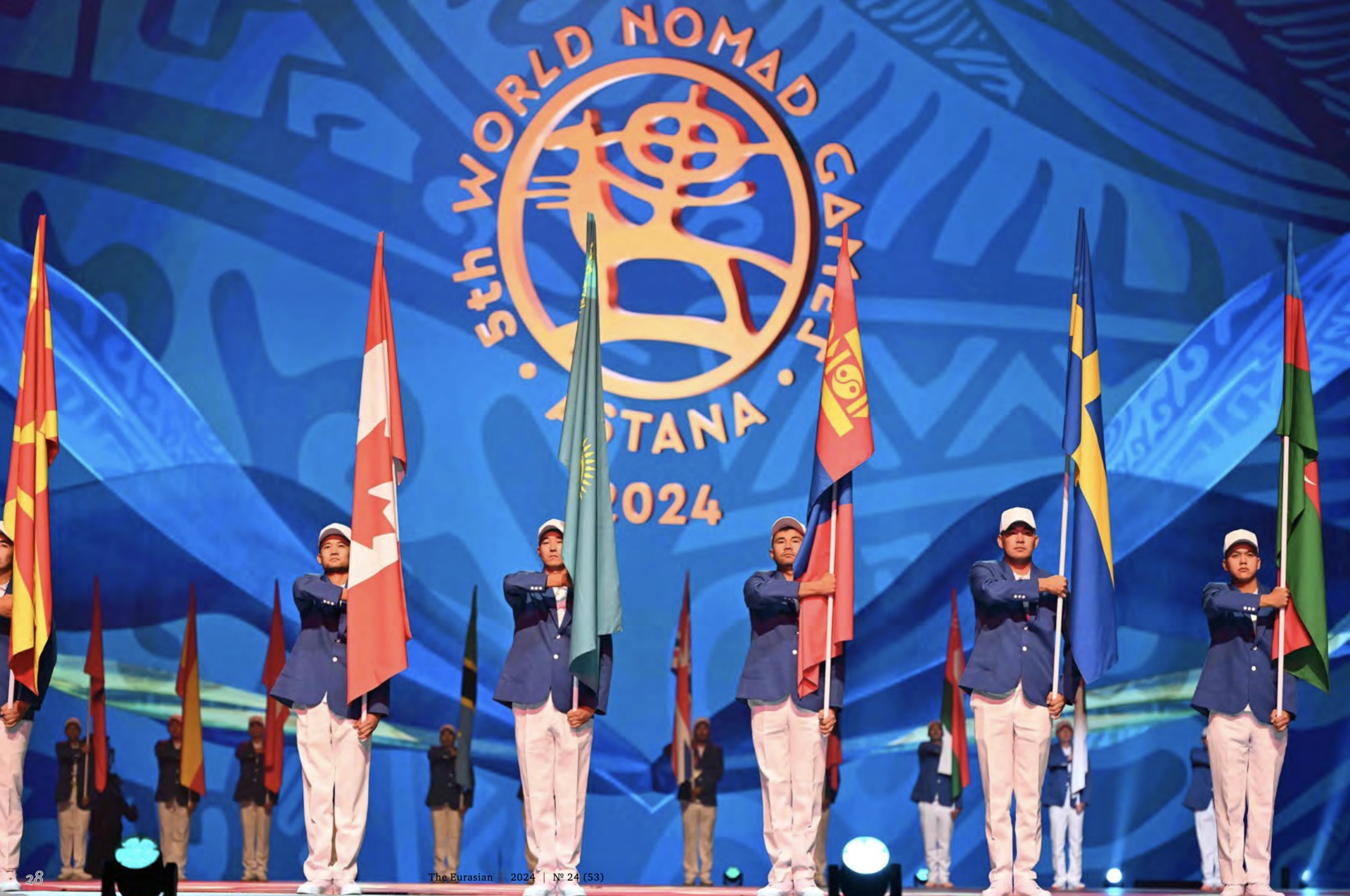
— The Games were attended not only by representatives of Central Asia, but also by athletes from various countries, including the United States, France and others. So how did they learn about the Games and how did they prepare to participate?
— First, information about the Games was disseminated thanks to the World Confederation of Ethnic Sports, one of the organizations involved in the Games. This global organization, headed by Mr. Belal Radagan, is dedicated to uniting, consolidating and coordinating the development of ethnic sports around the world. Thanks to this, it is not difficult for us to attract the attention of athletes and ethnic sport enthusiasts from different countries and invite them to participate.
It is important to understand that the sports included in the nomadic Games program are traditional in nature. These Games do not require sophisticated technology or specific equipment, making them accessible to a wide range of people. For example, if you compare the equipment of an archer at our games and at the Olympic Games, where modern suits, optics and high-tech weapons are used, the difference will be enormous. Nomadic Games use a simple bow, emphasizing the simplicity and accessibility of these sports.
Because of this simplicity, athletes from other countries do not need to undergo extensive training or special training. These sports don't require serious preparation to participate, but that doesn't mean winning them is easy. Each of these seemingly simple sports has its own elite who achieve high performance through hard training. We are proud that there are many of our Kazakhstani athletes among this elite.
— Am I correct in understanding that regional coaching staffs that teach ethnic sport techniques and strategies do not yet exist?
— Yes, there are no such global training centers now. However, we hold referee seminars and workshops during the Games, allowing participants and coaches to gain the necessary knowledge and skills. In the future, we plan to develop this area and there may be specialized training centers.
— What difficulties were encountered in organizing the Games?
— Naturally, there are certain difficulties in organizing an event of this scale. We faced having to cut the budget by almost a quarter due to economic challenges and natural crises such as the spring floods. This affected the cultural program of the Games and was probably the biggest challenge we had to face.
However, despite budget cuts, we were able to organize the Games at a high level. The Nomadic Universe ethnic village, which occupied 10 hectares, proved to be cramped for all comers — so great was the interest in the event from regions, sports communities and international guests. If we had 30 acres, we could easily fill it.
Competitions are held in almost any weather, and the Nomad Games are certainly no exception. Our ancestors competed in all conditions, and we strive to follow their example. Our athletes are not capricious: even if it rained, the competition continued. Most of the program was held indoors, such as asyk atu and arkan tartu, but equestrian disciplines, such as kokpar, were held at the outdoor racecourse "Kazanat", which was modernized and fully complied with modern standards.
We also placed a strong emphasis on hospitality and security. Kazakhstan is a hospitable country, and we tried to create all conditions for participants and guests to feel comfortable and safe. Minister of Tourism and Sports Yerbol Myrzabossynov personally checked hotels, catering facilities and other infrastructure to make sure everything met high standards.
The Games included participants from all continents, including countries not traditionally associated with nomadic lifestyles. Today, the notion of nomadic civilization has become a global concept. Modern man moves around the world, adapts quickly to new conditions, and in this sense each of us is a nomad. Therefore, we were pleased to welcome athletes from Cuba, Madagascar, Cyprus and other countries that seemingly have nothing to do with the nomadic lifestyle.
This is the manifestation of modern "neo-nomadism", which has become the leitmotif of our Games and their calling card.

— What was the result of the World Nomad Games?
— I am proud to say that the Games were a success and left an unforgettable impression on both participants and spectators. A total of 2,600 athletes from 89 countries representing all continents took part in the Games. This is a truly global event that proved that the notion of nomadic civilization is now worldwide. Modern people, in one way or another, live in conditions like a nomadic lifestyle, constantly moving and adapting to new circumstances.
I am pleased to report that Kazakhstan took first place in the team standings, winning 43 gold medals, 32 silver and 37 bronze medals. One of the key sports that generated a lot of interest was Kazakh kyresi, where 294 athletes from 44 countries participated. We demonstrated high organization and hospitality, which left positive feedback from international guests.
The Games helped to strengthen Kazakhstan's position as a center of ethnic sports, and the popularization of national sports was one of the main achievements of this event. For example, in the competitions in kokpar, kokboru and zhamby atu there was an unprecedented interest on the part of spectators and participants. The final kokpar races at the Kazanat Hippodrome attracted 20,000 spectators, and the participation of athletes from as far away as Canada and Mexico confirmed the global scale of the Games.
We are proud that the Games not only strengthened ties between countries and peoples, but also became a powerful stimulus for the development and popularization of ethnic sports on the world stage.
— Three main reasons why it was important to attend the 5th World Nomad Games?
— First, it was a real holiday, which is not every year in Kazakhstan. The games amazed with the combination of ancient sports such as asyk atu, zhamby atu and kokpar, with the modern urban surroundings of Astana. The grounds were decorated in the spirit of modern design, which gave the event a unique flavor.
Second, unlike the Olympics, there were no clear favorites here. The competition was unpredictable, which made it exciting for the spectators until the very end. Anyone could win, which added to the intrigue and interest.
Finally, it was a great opportunity for children and youth to learn more about their history and culture. The Nomad Games were an important step in fostering national identity through sports and cultural events. We hope that our heroes, as fighters of the Kazakh kyresi, will be an inspiration for future generations.
And then, of course, there's the support of our athletes. They have been preparing hard, many have already arrived in Astana and are very excited. Their support is critical to achieving victories because it not only builds their confidence, but also becomes a powerful source of energy that can turn their performance around and lead to striking victories.
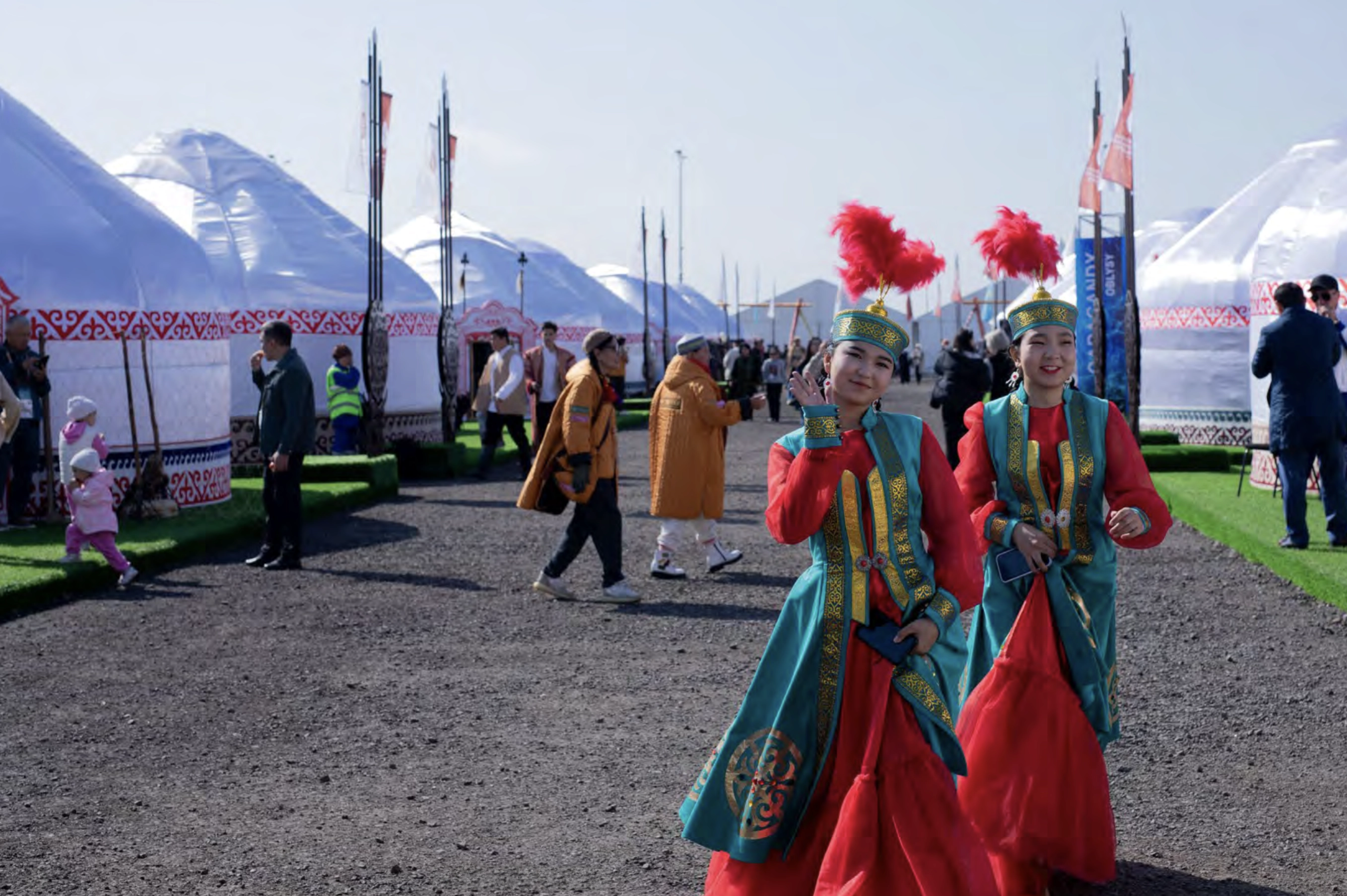
— What cultural events took place as part of the Nomad Games?
— The ethnic village “Koshpendiler Alemi” became the central cultural platform at the 5th World Nomad Games in Astana, uniting traditions and modernity. Ethnic village located on a huge area presented the atmosphere of an ancient nomadic civilization. There were 100 yurts installed, each demonstrating aspects of nomadic life and living. The guests could watch the process of cooking traditional dishes, participate in craft workshops on leather processing, creating jewelry and felt products. Additionally, there was an oriental bazaar with authentic Kazakh dishes.
The performances of ethnic folklore groups, as well as reconstructions of ancient rituals and customs of nomads were especially popular. Each day began with a colorful procession of “Shattyk kerueni”, which added to the festive spirit, and the main stage of “Oner Ordasy” served as a venue for performances by akyns, musical and poetic competitions and evening gala concerts. The ethnic village also hosted games related to nomadic culture, including the popular asyk atu and kokpar, giving guests the opportunity to participate in ancient sporting competitions.
The ethnic village has become not only a place to showcase nomadic heritage, but also a cultural bridge between past and present, uniting visitors around shared traditions and art.
In addition, four mini villages were organized in different parts of the city, where one could also see national dances, music and performances by Kazakh pop artists. The World Nomad Games are not only a sport, but also a cultural event that brings together traditions, arts and crafts, making them accessible to a wide range of people.