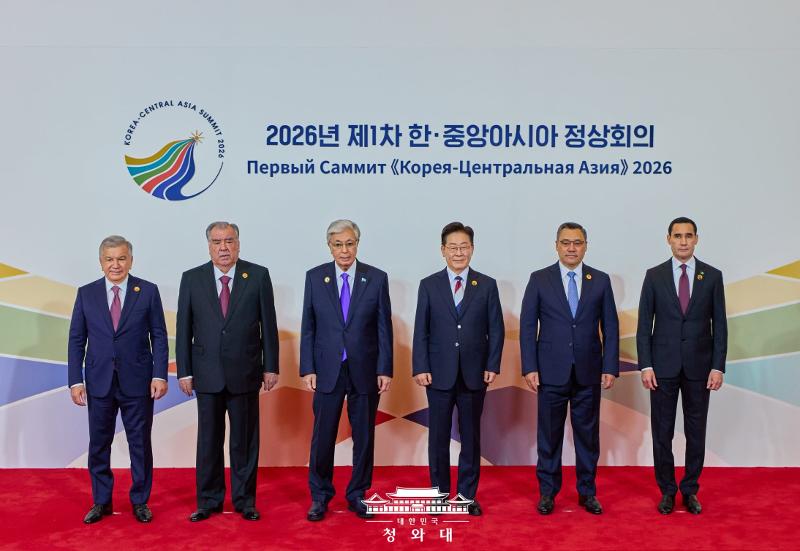
To move from the simple export of raw materials toward the production of finished goods within the region, the parties discussed the creation of joint manufacturing facilities and industrial and technology parks. Planned industrial cooperation will focus on automotive components, electrical equipment, and pharmaceuticals. The parties also agreed to develop resilient supply chains for critical minerals. The proposed model combines Central Asia’s resource base with Korean processing and manufacturing technologies. The agenda also covered the region’s participation in energy projects, ranging from nuclear technologies to green energy.The development of end-to-end transport routes from Korea through Central Asia to Europe was also discussed, including the expansion of the Trans-Caspian route. Other areas of cooperation included digitalization and the development of platforms for deploying new AI solutions.
Ahead of the Korea-Central Asia Summit, during the state visit of Kazakhstan’s President Kassym-Jomart Tokayev to Seoul, the two sides signed a package of agreements. The total value of the commercial agreements is estimated at approximately $19 billion.
Alatau City was discussed as a key platform for deploying Korean smart city technologies. Joint initiatives were presented for the development of a “K-Smart” city, education and R&D infrastructure, as well as urban air mobility (UAM/UTM) involving drones and air taxis. Hyundai Motor Group signed an agreement to explore business opportunities in smart cities, mobility, and energy in Alatau City, particularly in the Gate District. A memorandum was also signed between Hotel Lotte Co. Ltd. and Sensata Invest regarding hotel projects in Almaty and Alatau City.
Source: Korea.net