- Kazakhstan’s emergency response system is being actively modernized: volunteer fire-fighting units are appearing in villages, aviation is being developed, and emergency services are being integrated. What tasks does the Ministry for Emergency Situations consider key today in ensuring public safety?
- Today, with the support of President Kassym-Jomart Tokayev, we are consistently developing a modern civil protection system focused primarily on risk prevention and minimizing the consequences of emergency situations.
Whereas previously the main emphasis was placed on dealing with the aftermath of incidents, today the priority is the timely identification of potential threats, forecasting their development, and taking preventive measures. It is precisely this approach that underpins an effective safety system capable of meeting modern challenges.
For Kazakhstan, with its vast territory, it is especially important to ensure the effective operation of the civil protection system both in major cities and in the most remote settlements. Therefore, the key areas of our work are increasing the mobility of units, introducing modern technologies, and ensuring access to emergency assistance regardless of where citizens live.
One important decision was the development of volunteer fire-fighting units in rural areas. In remote settlements, the speed of response plays a decisive role. Volunteers know the specifics of their territory well and can begin initial actions even before state fire units arrive, which are often located dozens of kilometers from the scene. The «Ауыл құтқарушылары» (Auyl Qutqarushylary) program has already become an important element of the fire protection system.
At the same time, the aviation component of the Ministry for Emergency Situations is being developed. For our country, this is not an additional resource but an objective necessity. Aviation ensures the rapid delivery of rescuers to emergency areas, the evacuation of casualties, participation in flood response and wildfire extinguishing. In many cases, it remains the only way to provide timely assistance to people in hard-to-reach areas.
Special attention is being paid to the integration of emergency services. For citizens, it is important to receive help as quickly as possible, which is why we are building a unified response system in which all services act in a coordinated and effective manner.
A separate area is the digital transformation of the civil protection system. Modern systems for monitoring and forecasting emergency situations are being introduced, mechanisms for early warning of the public are being improved, and the capabilities of the Situation Centre are being expanded. Artificial intelligence technologies are being used increasingly actively for risk analysis and situation assessment.
At the same time, people remain the main resource. We continue to strengthen human resource capacity, improve the training of rescuers, and equip units with modern machinery and equipment.
- One of the important areas has been the «Ауыл құтқарушылары» (Auyl Qutqarushylary) project. Why was the decision made to place the emphasis specifically on developing the volunteer fire service in rural settlements?
- The «Ауыл құтқарушылары» (Auyl Qutqarushylary) project is based on the principle of equal access to safety for all citizens. Our task is to ensure timely assistance for every person, regardless of whether they live in a major city or in the most remote settlement.
Given Kazakhstan’s vast territory and the characteristics of population distribution, the distance to the nearest fire protection service units in some villages can range from several dozen to hundreds of kilometers. In a fire, it is often the first minutes that determine the scale of the consequences and the effectiveness of the subsequent response. Therefore, the development of volunteer fire-fighting units has become an important area for strengthening safety in rural areas. The project contributes to the development of a safety culture, increasing citizens’ responsibility, and improving the readiness of local communities to act in emergency situations.
As part of the program, 185 posts have already been established, and their number continues to grow. The Ministry provides them with fire-fighting equipment, motor pumps, communication equipment, special equipment, and the necessary gear. Special attention is paid to training volunteers, who undergo instruction and acquire practical emergency response skills.
- At the same time, the format of universal rescue units and the integration of services 102, 103, and 112 are being developed. What advantages does the unification of emergency services into a unified response system provide?
- This model proves most effective in complex situations requiring the involvement of several services at once. In such cases, the speed of coordination directly affects the outcome: the faster joint work is organized, the greater the chances of providing timely assistance to people.
When a person needs help, it does not matter to them which service arrives at the scene first. What matters is that assistance is provided as quickly and professionally as possible. Their work is based on close coordination among units of the Ministry for Emergency Situations, the police, and emergency medical services.

The first universal complexes were opened in the Eltai, Tasken, and Saule microdistricts of the city of Shymkent. This year, a similar facility began operating in the Bozaryk residential area.
The effectiveness of emergency response is largely determined by the ability of different services to work as a single team. This is precisely the kind of system we are consistently building. All response participants must act in a coordinated manner, working toward a common goal: protecting the lives and health of citizens.
- To what extent have digitalization and coordination among services already affected response speed and the effectiveness of assistance in emergency situations?
- Digital technologies have already become an important tool for improving the efficiency of emergency services. They make it possible to receive information virtually in real time, analyze the situation more quickly, and make decisions on deploying the necessary forces and resources.
A central role in this work is played by the Emergency Ministry’s Situation Centre, which receives data from various monitoring systems, including monitoring of forest fires, seismic activity, and hazardous production facilities. Mining industry facilities and the Caspian Sea waters are also under constant oversight.
To monitor forest fires, 114 surveillance cameras equipped with artificial intelligence features are in use across eight regions of the country. These technologies make it possible to identify potential threats in a timely manner and take the necessary measures at an early stage.
Unmanned technologies have seen significant development. Today, 68 automated docking stations with unmanned aerial vehicles are in operation. Information from them is transmitted directly to the ministry and territorial divisions. By the end of 2025, about 3,000 UAV flights had been carried out, during which 46 people were rescued. In the first quarter of this year, another seven people were rescued.
The development of early warning systems for the public is continuing. In Almaty, an automated earthquake early warning system is in operation, comprising 28 seismic stations and three dispatch points. It ensures prompt processing of seismic activity data and makes it possible to inform the public of possible danger as quickly as possible.
Special attention is being given to the development of the Unified Duty Dispatch Service 112. A unified digital space for emergency services is gradually taking shape in the country. Pilot projects have already been implemented in Astana and Kyzylorda.
Technologies for automatic caller location, video monitoring systems, and intelligent processing of requests are being introduced into operations. These solutions make it possible to significantly reduce the time needed to obtain information and improve the quality of interaction among services.
- Another strategic area is the development of Emergency Ministry aviation and the creation of twenty aviation units. What role does aviation play today in wildfire extinguishing, search and rescue operations, and medical evacuation?
- For Kazakhstan, aviation remains one of the key elements of the emergency response system. The country’s vast territory, the considerable distances between populated areas, and the presence of hard-to-reach regions require high mobility from civil protection forces. In many cases, it is aviation that makes it possible to provide assistance in the shortest possible time.
Emergency Ministry aircraft are used for wildfire extinguishing, conducting search and rescue operations, medical evacuation, aerial monitoring, and transporting rescuers to emergency areas. An important stage in the development of the aviation unit was the appearance, for the first time in the history of Kazakhstan’s Emergency Ministry, of its own airplanes for the rapid deployment of personnel, equipment, and humanitarian cargo to emergency zones. In 2026 alone, the ministry’s aviation carried out 1085 flights in various areas.
Aviation is of particular importance in combating wildfires. Aerial monitoring makes it possible to detect seats of fire in a timely manner and monitor the situation across large areas. In hard-to-reach terrain, aviation equipment often becomes the most effective means of response. The earlier a fire is detected, the greater the likelihood of containing it with minimal consequences for the public and the environment.
Aviation plays an equally important role in search and rescue operations. Searching for people in steppe terrain, mountainous areas, and remote territories requires the rapid survey of large areas.
Air ambulance service remains a separate area. In the first 5 months of this year, 213 air ambulance flights were carried out, during which 229 patients were transported. Behind each such figure are human lives and the opportunity to deliver a person to a specialized medical institution in time.
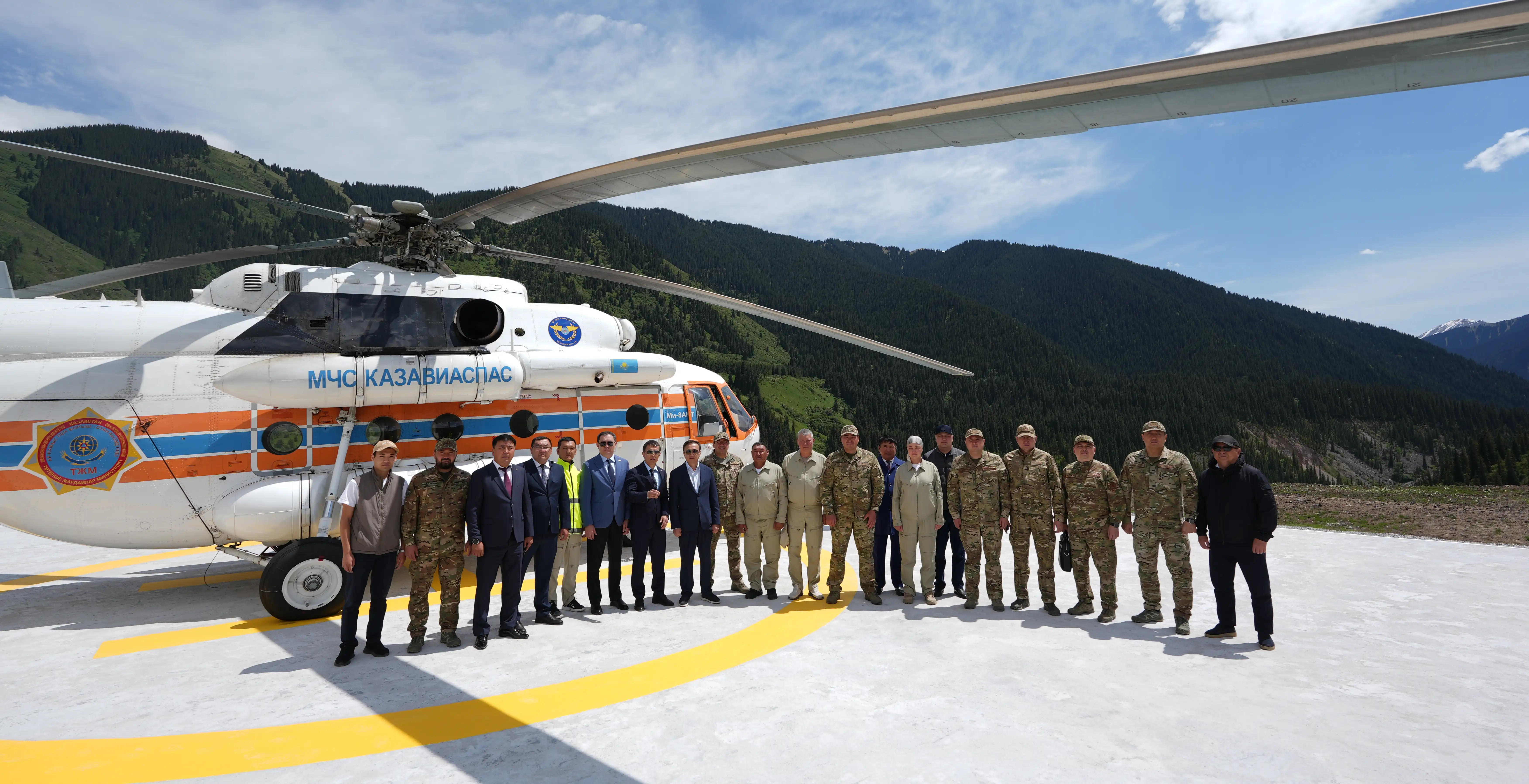
Work on developing aviation infrastructure is continuing in all regions of the country. Today, a project is being implemented to create twenty Kazaviaspas aviation units based on the principle of uniform coverage of Kazakhstan’s territory. Its main goal is to reduce response time and increase the accessibility of aviation assistance for the public.
An important milestone was the opening of an aviation unit in Zhezkazgan. Central Kazakhstan occupies a strategic position from the standpoint of logistics and emergency response. The deployment of aviation forces in this region will make it possible to improve the promptness of assistance to the public, strengthen response to incidents at industrial facilities, and expand the capacity to conduct search and rescue operations in Ulytau Region and neighboring regions.
- Speaking more broadly, how are all these projects changing the approach to safety in Kazakhstan, and how do you see the development of the response system in the coming years?
- The main change now taking place in the Emergency Ministry system is the shift from responding to consequences to risk prevention. This approach extends to virtually all areas of our work.
Every emergency situation has its own specifics; however, the principle remains unchanged: the earlier a threat is identified, the greater the opportunities to protect people, preserve property, and avoid serious consequences. That is why special attention is paid to forecasting, monitoring, and timely decision-making. All the projects being implemented today serve precisely this purpose. The development of aviation, the introduction of digital technologies, the improvement of the 112 system, the creation of universal emergency services complexes, and the «Ауыл құтқарушылары» (Auyl Qutqarushylary) program complement one another and form a unified safety system.
In the coming years, work will focus on further strengthening the aviation component of the Emergency Ministry, expanding the network of Kazaviaspas aviation units, introducing modern data analysis technologies, and improving interagency coordination. Special attention will be given to protecting populated areas from wildfires, floods, and other hazardous natural phenomena.
Today, the effectiveness of civil protection is not determined by the amount of equipment or the number of infrastructure facilities. Far more important is the ability to receive information in a timely manner, assess the situation correctly, and make decisions quickly. It is precisely this approach that makes it possible to act proactively and reduce risks for the population.
Our goal remains unchanged: regardless of where a person lives—whether in a major city or a small rural locality—they must be confident that, in the event of danger, help will arrive in time. To achieve this, we are continuing the modernization of the country’s entire civil protection system