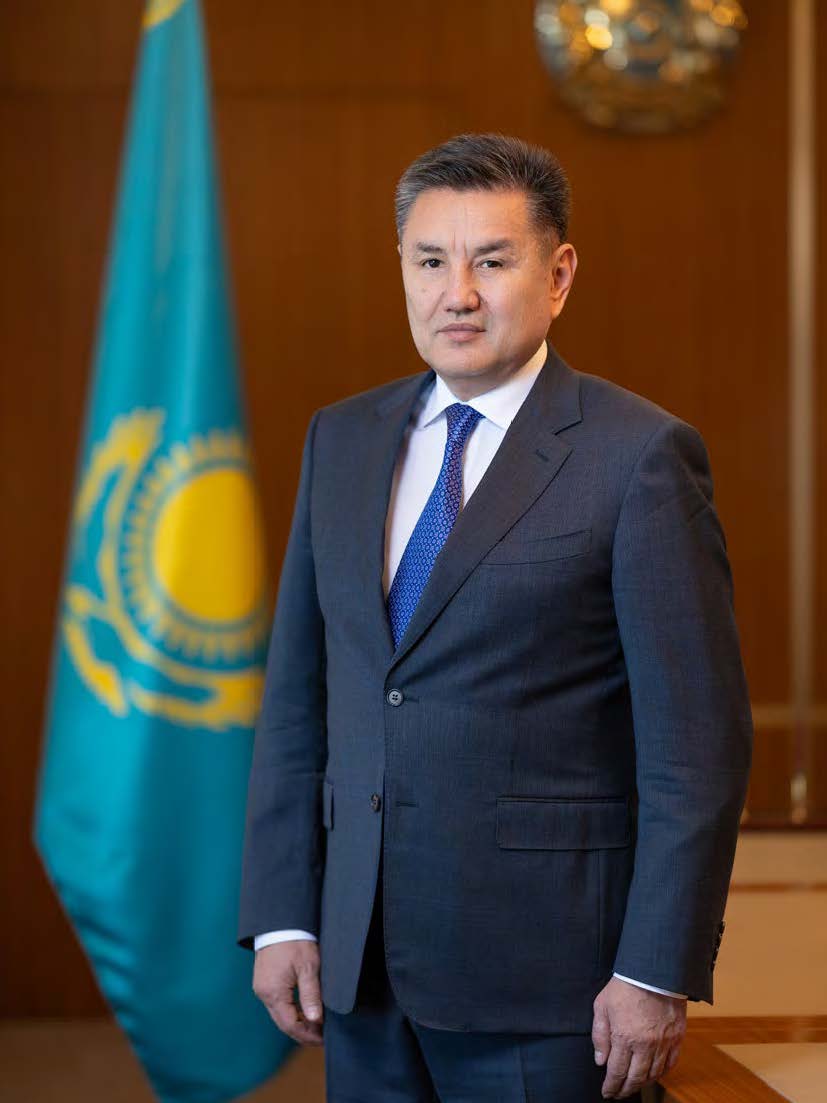
Regional governor Nurymbet Saktaganov puts it simply: “East Kazakhstan Region is one of the country’s most promising regions.” And this optimism is justified: a new growth model is taking shape here—technology-driven, sustainable, and, importantly, more people-centered. This development is expressed in concrete projects, investment, and the emergence of new growth hubs.
East Kazakhstan is often described as a region with a “deadend” geography. Yet from a broader perspective, proximity to Russia and China is a rare combination that offers advantages rather than risks. Two borders—two markets, two logistics routes, and two modes of cooperation. What was once seen as a constraint is gradually becoming a strategic advantage.
The industrial complex continues to account for the bulk of gross regional product. At the same time, its structure is shifting toward high-tech and export-oriented segments. Kazzinc JSC, the Ust-Kamenogorsk Titanium and Magnesium Plant, and the Ulba Metallurgical Plant form the industrial core of the region. The Ust-Kamenogorsk Titanium and Magnesium Plant supplies titanium products to global aircraft manufacturing corporations, including Boeing and Airbus. Fuel assembly production is expanding at the Ulba Metallurgical Plant: Ulba-FA manufactures and supplies nuclear fuel, including for China’s nuclear power industry. Ulba’s products made of uranium, beryllium, and tantalum are used in the nuclear, electronics, and aerospace industries, securing the region a stable position in global value chains. Thus, East Kazakhstan Region’s industry not only provides jobs and tax revenues but is also becoming a driver of technological development.
In parallel, a new investment framework is taking shape. East Kazakhstan Region’s portfolio includes 81 projects totaling over one trillion tenge, 64 of which are in the active implementation stage. This year, 15 projects totaling 55 billion tenge are slated to launch, creating more than 400 jobs. For the region, this marks a shift from piecemeal investments to a systemic flow of capital that is reshaping the economic landscape.
An additional boost came from the Altai Invest Investment Forum held in September, which brought together more than 300 participants from 10 countries. The forum resulted in 40 memoranda totaling 740 billion tenge, underscoring growing investor interest in the region not only as an industrial platform but also as a venue for projects in processing, the agro-industrial complex, logistics, and tourism.
Agriculture retains its status as one of the region’s foundational sectors, with the focus gradually shifting toward deep processing and value-added growth. Projects to expand irrigated farming are underway, digital tools for agricultural process management are being rolled out, and domestic production of Su Bereke sprinkler irrigation systems has been established. The Altyn Shygys plant specializes in lecithin production and targets export markets. East Kazakhstan is a national leader in honey production, accounting for more than half of the countrywide output. Products are supplied to China and Belarus, and San Bi Altai became the first company in Kazakhstan to receive authorization for official exports to the European Union, enabling the regional product to enter international agri-food value chains. Maral farming complements the agricultural profile—a niche segment that combines animal husbandry, bioproduct processing, and elements of wellness tourism.
Small and medium-sized businesses are gaining strength, forming a flexible economic layer that creates new services and employs one in three residents of the region. This segment is becoming a key factor in the regional economy’s resilience amid external volatility.
Tourism has always been popular in the region, yet for a long time it contributed little to the economy. Today the sector is also viewed as a growth driver: Belukha, Markakol, Katon-Karagay, and Bukhtarma are attracting more tourists, and new complexes and festivals are making the region appealing year-round. The services market is no longer secondary and is becoming an independent economic driver.
Year-round tourism complexes BearLog and Ridder Resort are developing in the region, and projects are underway in Katon-Karagay District and Zaysan District, where airport construction is laying the groundwork for tourism hubs. Another focus is medical and wellness tourism, including preparations to modernize the Rakhmanovskie Klyuchi Sanatorium.
Event tourism is becoming part of the region’s identity. The Shygys Salburyńy-2025 Ethno-Festival brought together 148 berkutchi from eight countries and more than 10,000 spectators. Preparations are underway for the AyazAta, Akshakar Festival and the Bukhtarma Fisherman Festival. Such events shape the region’s own cultural map and enhance its appeal. Infrastructure is beginning to match rising demand—an important sign of a mature strategy.
The environmental agenda in the region is increasingly viewed as part of the economic strategy. East Kazakhstan Region holds about 40% of Kazakhstan’s forest fund, making sustainable forest management and reforestation key management priorities. Projects are underway in waste processing and renewable energy, including small hydropower plants. Water resources are addressed holistically—as a foundation for energy, fish farming, and agricultural production—enhancing the region’s development resilience over the long term.
Taken together, these processes form a coherent picture: East Kazakhstan retains its status as one of the country’s key industrial regions while building a more sophisticated and diversified economic model. Large industry and the agricultural sector remain its backbone; however, investment, processing, small business, and tourism are steadily gaining ground. For the business community, the region is compelling as a territory with an advanced production base, a growing investment portfolio, and a clear logic of long-term economic development