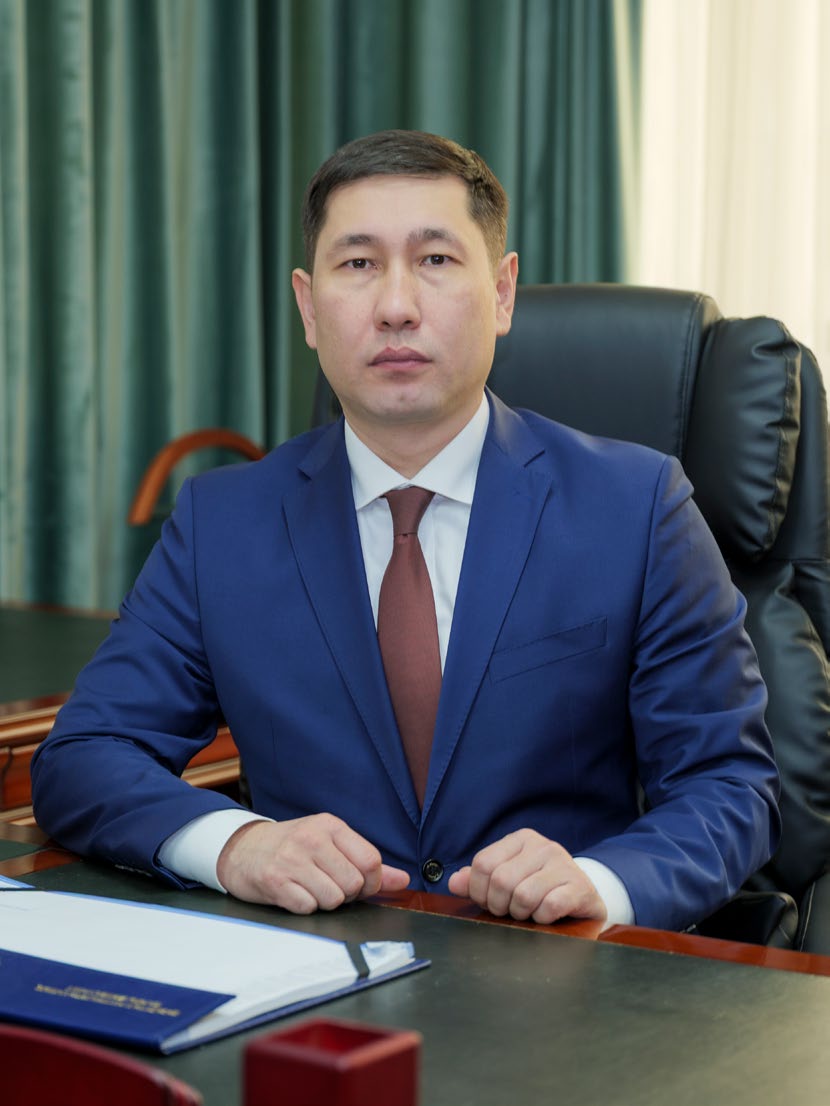
— Dauren Odenovich, as of this year, oversight of the Health Insurance Fund’s spending has been transferred to the Finance Ministry. The budgets are enormous, yet people complain that they are being treated only “on paper.“ Where will your “surgical intervention“ begin?
— The healthcare budget is indeed enormous. In 2025 alone, revenues for the guaranteed volume of medical care and mandatory social health insurance exceeded 2.7 trillion tenge. At the same time, nearly 3.4 million Kazakhstanis still remain outside the insurance system.
When we began taking a deeper look into the processes of the Social Health Insurance Fund, we saw the main systemic illness: fragmentation. Data within just one process is currently handled sequentially across five different digital systems. As a result, we have huge “blind spots“ and no single digital trail. Even the basic process of medical care needs assessment has still not been properly automated. That is where the notorious fictitious billing comes from, when people suddenly discover in mobile apps that they supposedly underwent a dozen examinations.
— Following criticism from the President, the prime minister also instructed officials to restore order. What specific tools are you preparing for this?
— Starting in mid-March, we are launching a pilot project: the Qalqan digital healthcare financing service and its web portal, Qalqan.e-Qazyna.kz. We are completely changing the control philosophy by introducing an end-to-end digital workflow “from contract to payment.“
What will this mean for the average citizen and for the budget? The system will create an electronic medical organization profile for each healthcare provider, integrated with 31 medical information systems. The issuance of digital insurance policies will operate on a voucher-based model. And most importantly, we are introducing strict patient biometric identification through Face ID or a QR code.
— So a doctor will not get paid until the patient literally “shows their face“?
— Exactly.
No certificates of services rendered signed retroactively for nonexistent patients. Budget payments will go through the accounts of the State Treasury Committee only after automatic anti-fraud control is triggered

We must be certain that a real person came in, identified themselves, and received real care.
— Often overshadowed by high-profile IT reforms is the State Property Committee. For years, confiscated and seized assets—cars, real estate, equity stakes in businesses—have sat gathering dust, losing value, while the state also spends millions to guard them. When will this absurdity end?
— You have touched on a very painful issue. As part of implementing the President’s Address, we are currently revising the Law on State Property jointly with the Ministry of National Economy.
As for seized property, this truly is an area of unjustified losses. While we already manage confiscated property in a fairly systematic way, seized assets create a problem while lengthy court proceedings are underway. They sit idle and lose value. This year, we are changing our approach: the goal is not merely to preserve the value of assets during their procedural freeze, but also to generate benefits for the state. We plan to apply the experience of the specialized Property Management Company. This will relieve the budget of the burden of storage costs and, importantly, allow us to comply with international FATF recommendations (Financial Action Task Force. — Ed.).
— What about ordinary, non-criminal property and land? Will there be digital changes there as well?
— Absolutely. By June 1, 2026, we plan to automate nine key functions of the State Property Committee, from approving division balance sheets and liquidation balance sheets to property redistribution.
For the allocation of agricultural land, only electronic tenders will be used to eliminate the human factor and corruption. For the quasi-public sector, we are launching cloud accounting, while Big Data and satellite monitoring technologies will help us monitor the efficient use of assets and land.
— Dauren Odenovich, finally, the most intriguing topic: the “digital tenge.“ For many Kazakhstanis, this initiative raises concerns and sounds like a tool for total control over personal wallets. Why does the Finance Ministry need it?
— I understand these concerns, but I want to reassure people: this is not about monitoring citizens’ personal savings, but about imposing strict order on the spending of public money.
A package of amendments to the Budget Code regulating the use of the digital tenge is already under review in the Mazhilis. In budget execution, the digital tenge will become our main anti-corruption shield. Put simply, it is a technology for the tagging of budget funds.
— Like “marked bills“?
— In a digital sense, yes. We will be able to see the intended use of every tenge allocated by the government throughout its entire path—from the ministry’s account all the way to the ultimate subcontractor. This will effectively eliminate the possibility of misuse of funds or their diversion.
To do this, we are launching the Treasury 2.0 project. The Treasury’s information systems will be directly integrated with the digital tenge platform and Digital ID. We will introduce new forecasting and liquidity management tools. We are beginning to implement this target model this year.
— Thank you for the interview. Your answers have been very substantive!
— Unfortunately, this has been more of a whirlwind overview, but I wanted to convey to the public as much as possible of everything we are doing today. The Ministry of Finance has a great many tasks before it. For us, digitalization is not about chasing trends, but a real tool for protecting the budget and ensuring the country’s resilience. Thank you!